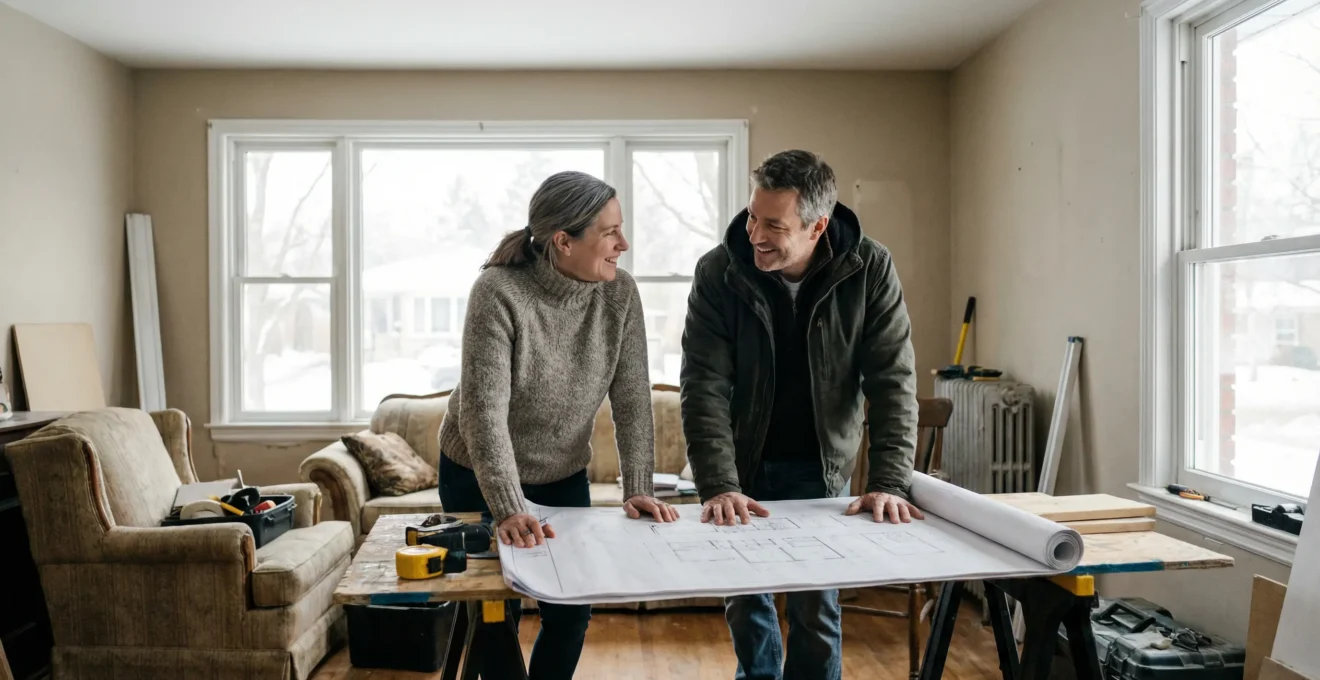
You have walked through your 1985-built home in Kanata for the hundredth time, mentally tearing down walls and reimagining every room. The kitchen feels cramped. The bathrooms are dated. The basement sits half-finished. A whole-home renovation seems like the obvious answer—until you realize you have no idea where to start. That overwhelm? It is real. And it is exactly where projects go wrong before a single contractor shows up.
Your whole-home renovation planning phases in 60 seconds:
- Phase 1: Assessment (1-3 weeks) — Evaluate existing conditions and uncover hidden issues
- Phase 2: Design (3-6 weeks) — Finalize all decisions before construction begins
- Phase 3: Pre-Construction (2-4 weeks) — Permits, contracts, and scheduling
- Budget 8-12 weeks of planning before any construction starts
The families I work with in Ottawa often assume they can compress this timeline. They want to jump straight to picking cabinet colors. I get it. But in my experience, rushing the planning phases almost guarantees you will spend more money and more time fixing problems that proper preparation would have prevented.
What follows is the sequence of planning phases that actually works—the one I walk clients through before they sign anything or commit a dollar to construction.
Why Most Whole-Home Renovations Fail Before Construction Even Starts
Here is something that frustrates me: homeowners often think the hard part of renovation is the construction itself. The dust. The noise. The disruption. But the truth? Most projects derail during planning—or because planning never happened properly.
83%
Proportion of homeowners who faced challenges during their renovation project
According to renovation spending trends and challenges 2026, budget constraints topped the list of difficulties at 28%, and a striking 70% of homeowners went over budget on their latest project. These are not unlucky outliers. This is the norm when planning gets shortchanged.
I worked with a young couple in Barrhaven last year—their 1990s-built home needed a complete interior renovation. They wanted to skip the permit phase entirely for what they considered « just interior work. » Seemed reasonable to them. Why involve the city for some new flooring and a bathroom update? The problem surfaced when they went to sell two years later. Insurance complications. Questions about undocumented electrical work. They spent weeks retroactively documenting everything, and it nearly killed the sale.
Watch out for this trap: Skipping or rushing assessment to save time almost always backfires. Older Ottawa homes—especially in neighborhoods like the Glebe or Westboro—frequently hide surprises behind walls. Outdated wiring. Water damage from ice dam issues. Structural shifts from our freeze-thaw cycles. Taking an extra two weeks upfront typically saves two months of headaches later.
The planning phases I am about to describe are not bureaucratic formalities. They are the difference between a renovation that transforms your home and one that transforms your savings account into a stress fund. If you are serious about a whole-home project, this page provides a starting point for understanding what a structured approach looks like with professionals who know Ottawa.
The Three Planning Phases That Determine Your Renovation Success
Every successful whole-home renovation I have been part of follows the same three-phase structure. Not because I invented it, but because it works. Each phase has a specific purpose, and rushing through one creates problems in the next.
Phase One: Assessment and Discovery
This is where you learn what you are actually working with. Not what you assume. Not what the previous owner told you. What is actually inside your walls, under your floors, and behind that suspicious water stain in the basement.

Assessment typically takes one to three weeks depending on your home’s size and age. A qualified professional will evaluate structural conditions, inspect electrical and plumbing systems, document any code compliance issues, and identify potential problems that would surface mid-construction.
Frankly, I advise against skipping this even if your home is relatively new. I have seen 15-year-old homes in Orleans with foundation cracks nobody noticed. I have seen « recently updated » kitchens with electrical work that would make an inspector wince. Assessment is not pessimism. It is preparation.
The deliverable from this phase should be a detailed report of existing conditions. This document becomes the baseline for everything else—your design decisions, your budget allocations, and your contractor scope of work.
Phase Two: Design Development and Decision Lock-In
This is where most homeowners want to live forever. Browsing Pinterest. Collecting inspiration photos. Visiting showrooms. That part is fun. But Phase Two is not about dreaming. It is about deciding.

Design development runs three to six weeks. During this time, you finalize layout changes, select materials, choose fixtures and finishes, and lock in appliance specifications. Every decision you defer to « figure out later » becomes a potential delay or change order during construction.
My take, for what it is worth: decision fatigue is real. The projects I have been part of show that homeowners who try to keep too many options open burn out and make rushed choices later. Or worse, they change their minds mid-construction, which is where budgets explode.
When you are thinking through design, consider how optimized storage ideas for your space can be integrated from the start rather than added as an afterthought. Planning storage during design costs a fraction of retrofitting it later.
Decisions to lock in before construction starts
-
Final floor plan and any structural changes
-
All flooring materials with exact specifications
-
Cabinet style, finish, and hardware
-
All plumbing fixtures (faucets, sinks, toilets, showers)
-
Appliance models with confirmed dimensions
Phase Three: Pre-Construction Coordination
This is the phase that separates professional renovations from DIY disasters. Permits. Contracts. Scheduling. Insurance verification. It is not glamorous. It is essential.
Pre-construction coordination typically takes two to four weeks. You are finalizing contractor agreements with detailed scope of work documents. You are submitting permit applications. You are confirming material lead times and delivery schedules. You are making arrangements for where you will live if the project requires it.
The Martineau family—clients from Orleans I helped plan their renovation—learned this the hard way. Their whole-home project plus basement finishing had unclear scope documentation. The City permit office flagged their drawings twice for insufficient detail on electrical load calculations. Project started five weeks late. The silver lining? Because we had built contingency time into the planning phase, they still completed on budget. But that buffer would not have existed if they had rushed to start construction.
-
Initial consultation and project scoping -
Assessment and discovery phase -
Design development and decision lock-in -
Pre-construction coordination and permits -
Construction begins
Ottawa-Specific Factors That Shape Your Planning Timeline
Generic renovation advice assumes you live in a mild climate with predictable permit timelines. Ottawa is neither of those things. Our planning approach needs to account for factors that other guides ignore.
Ottawa permit timelines in 2026: According to City of Ottawa permit timeline requirements, small homeowner projects (decks, porches, sheds, garages) have a Council-approved timeline of 5 business days. Full house permits for detached, semi-detached, or row houses carry a 10 business day target. Processing times vary depending on available resources, application volume, and completeness of your submission.
Those timelines assume complete applications. In my work with Ottawa homeowners, I see incomplete submissions returned for revision regularly. Add two to four weeks to your schedule if your drawings lack detail or your scope descriptions are vague. It is not the City being difficult. It is the Ontario Building Code requiring compliance verification.
Seasonal timing matters here more than in most Canadian cities. Spring and early fall tend to be optimal for starting exterior-dependent renovations. Our winters are brutal on construction schedules—not impossible, but more expensive and less predictable. Interior work proceeds year-round, but contractor availability tightens significantly from October through December as everyone rushes to complete projects before the holidays.
Planning tip: If your whole-home renovation includes any exterior work, start your planning phase in late fall or early winter. By the time you complete assessment, design, and permits, you will be positioned to begin construction in early spring when conditions are favorable and before the summer contractor crunch.
Living arrangements are another Ottawa-specific consideration. With housing costs what they are, moving out for several months is not financially feasible for every family. The projects I have been part of show that about half of whole-home renovations can be phased to allow partial occupancy—but only if that phasing is planned from the beginning, not improvised mid-project.
When you think about the investment you are making in your home, understanding the drivers of your property’s appraised value helps ensure your renovation decisions align with both your lifestyle goals and your financial position.
Your Questions About Planning a Whole-Home Renovation
How long does the planning phase take for a whole-home renovation?
Budget 8 to 12 weeks for thorough planning before construction begins. This includes assessment (1-3 weeks), design development (3-6 weeks), and pre-construction coordination (2-4 weeks). Rushing this timeline typically creates delays during construction that exceed any time « saved. »
Do I need permits for interior renovations in Ottawa?
Permit requirements vary by project scope. Structural changes, electrical modifications, and plumbing work typically require permits even for interior projects. Cosmetic updates like painting, flooring, or cabinet refacing generally do not. When in doubt, check with the City of Ottawa Building Code Services before starting work.
Should I stay in my home during a whole-home renovation?
It depends on scope and phasing. Partial occupancy works for some projects if planned carefully from the beginning—typically when work can be isolated to specific areas while maintaining one functional bathroom and kitchen access. Full gut renovations usually require temporary relocation. Factor housing costs into your budget either way.
How much should I budget for unexpected costs?
Most renovation professionals recommend setting aside 15-20% contingency for unexpected costs. For older Ottawa homes (pre-1980), consider 20-25%. Thorough assessment during Phase One reduces surprises, but every renovation uncovers something. Building contingency into your budget from day one prevents mid-project financial stress.
When is the best time to start a renovation in Ottawa?
Start your planning phase in late fall or early winter to position construction for early spring. This timing takes advantage of better weather for any exterior work and beats the summer contractor rush. Interior-only projects can begin any time, though contractor availability tightens October through December.
Your Next Step Forward
Planning a whole-home renovation is not about following a checklist. It is about making decisions in the right order so each choice builds on solid ground. Assessment reveals what you are working with. Design locks in what you want. Pre-construction ensures everyone—you, your contractor, the City—agrees on exactly what will happen.
The families I work with who complete their renovations on time and on budget share one thing: they invested in planning before they invested in demolition. Not because they were patient by nature. Because they understood that every dollar spent on proper planning saves five dollars in mid-project corrections.
My recommendation? Start your assessment. Not next month. Not next year. This week. Walk through your home with fresh eyes. Document what you see. Then find a professional who can tell you what you cannot see—and help you build a plan that actually works.
Important Considerations for Your Renovation Planning
This guide provides general planning frameworks; your specific project may require additional phases based on home age and condition. Timelines mentioned are typical ranges and can vary based on contractor availability, permit processing, and material supply chains in 2026. Budget allocations should be verified with licensed contractors familiar with Ottawa market conditions.
Potential risks to consider:
- Risk of permit delays if applications are incomplete or non-compliant with Ontario Building Code
- Risk of budget overrun if contingency allowance is below 15-20% for older homes
- Risk of contractor disputes if scope of work documentation is insufficiently detailed
For project-specific guidance, consult a licensed general contractor or City of Ottawa Building Code Services.