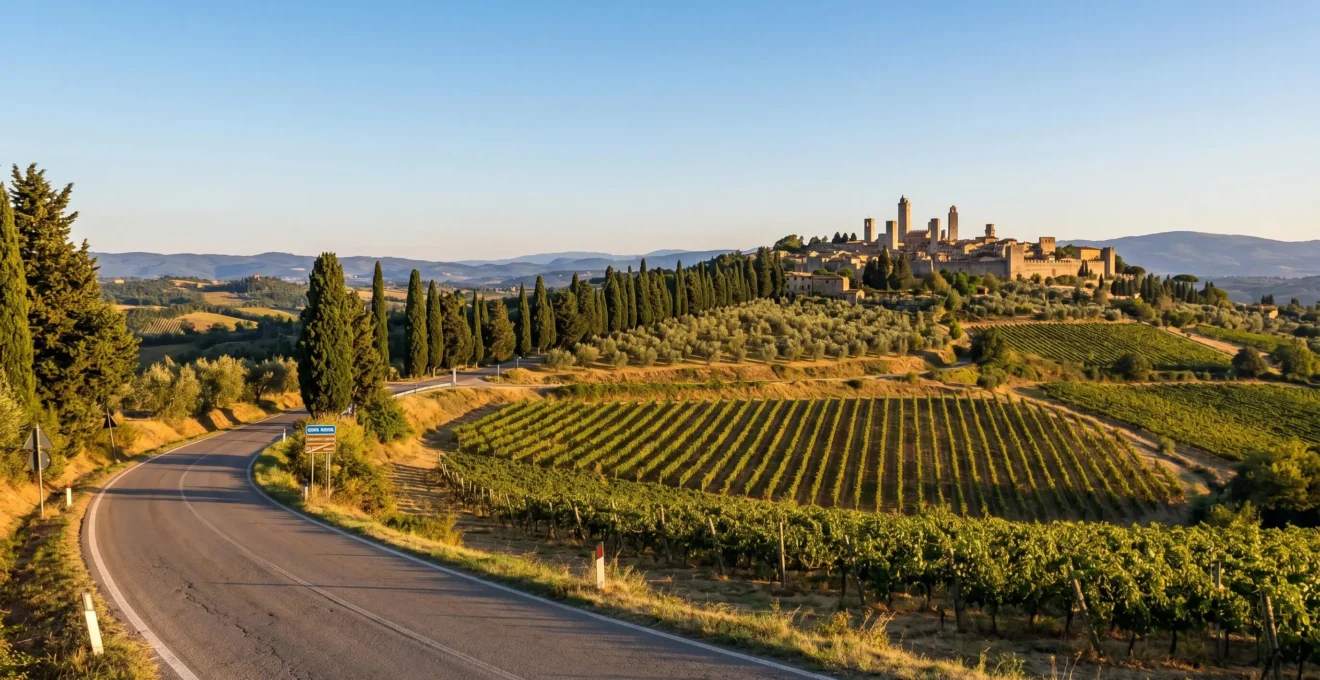
Florence’s historic centre draws millions of visitors each year, yet the region’s most compelling experiences often lie beyond the city walls. The Tuscan countryside—dotted with medieval hill towns, vineyard-draped valleys, and Renaissance-era piazzas—sits within practical day-trip range. Transport logistics, though, shape which destinations become accessible and which remain frustratingly out of reach.
The question of how to visit these rural treasures from a Florence base hinges on three transport modes, each with distinct trade-offs. Organized bus tours eliminate navigation stress but follow fixed schedules. Regional trains connect major cities efficiently yet miss smaller villages entirely. Car rental offers routing freedom whilst introducing parking restrictions and zone-based fines that catch unprepared drivers.
Your Tuscany planning snapshot: 4 transport realities
- Florence hosted approximately 8 million day-trippers in 2025, confirming its role as the region’s primary gateway for countryside exploration
- Bus tours handle all parking and timing coordination; trains reach Siena and Pisa but not San Gimignano or Chianti; cars provide rural access but require navigating automated traffic restrictions
- Priority destinations within 60-90 minutes: Siena’s Piazza del Campo, San Gimignano’s medieval towers, Chianti wine estates, Pisa’s iconic complex, Lucca’s Renaissance walls
- Book organized tours 3-7 days ahead in peak season (May-September); verify final train departure times before outbound journeys; budget sufficient cash for village purchases where card readers remain uncommon
Florence as your gateway into the Tuscan heartland
Florence’s geographic position places it at the convergence of major Tuscan transport corridors. According to 2025 Centro Studi Turistici figures on Florence day-trippers, the city hosted around 8 million single-day visitors that year, with over 50,000 tourist buses entering between January and October alone—a 45% increase from 2024. This traffic volume reflects Florence’s strategic value: Santa Maria Novella station anchors regional rail connections, whilst designated coach terminals facilitate organized tour departures to destinations across the surrounding countryside.
The city’s location offers practical advantages over alternatives. Travellers basing themselves in coastal Pisa face longer journeys to interior hill towns. Those starting from Rome confront 90-minute minimum transfers before even reaching Tuscan territory. Florence eliminates this preliminary travel burden, positioning visitors within comfortable reach of Siena, San Gimignano, Chianti vineyards, and Lucca’s historic centre.
This accessibility explains why experienced travellers typically recommend Florence as a day-trip hub rather than attempting to lodge in smaller Tuscan towns. Rural accommodations often lack the transport frequency needed for flexible itinerary adjustments. Staying centrally in Florence preserves schedule control whilst maintaining guaranteed access to the region’s dispersed attractions through multiple transport modes.
Weighing your transport choices: tours, trains, and independent driving
Three distinct transport systems serve Florence-to-Tuscany routes, each calibrated for different traveller priorities. Organized transport solutions absorb logistical variables, whilst train and car options transfer responsibility—and associated problem-solving burden—to the traveller.
| Transport mode | Cost profile | Key advantage | Primary constraint | Best suited for |
|---|---|---|---|---|
| Organized bus tours | Moderate to premium per person for multi-destination packages | Zero navigation stress; guaranteed return timing; parking handled; cultural context via guides | Fixed departure/return schedule; group pacing; limited spontaneous stops | Time-poor travellers; non-drivers; those prioritizing stress-free logistics over maximum flexibility |
| Regional trains | Low fares for major city connections | Economical pricing; frequent departures to major cities; independent exploration time; reliable schedules | Limited rural coverage (no San Gimignano or Chianti direct access); requires connection coordination; language barriers at smaller stations | Budget-conscious travellers; confident navigators; those focusing on single major-city destinations (Siena, Pisa, Lucca) |
| Car rental | Daily rental costs plus fuel and parking fees | Complete routing freedom; access to remote vineyards and villages; flexible timing; luggage convenience | ZTL automated fines; parking scarcity in historic centres; navigation complexity; driving stress on unfamiliar roads | Confident drivers familiar with European traffic rules; groups of 3-4 splitting costs; itineraries requiring remote rural access |
Organized bus tours from Florence
For travellers prioritizing seamless coordination and cultural depth over routing independence, organized coach services offer a compelling solution. Tuscany bus from Florence operators centralize all logistical elements that independent travel disperses across multiple bookings: scheduled departures from accessible Florence terminals, pre-arranged parking at peripheral zones, guaranteed return timing, and expert guide commentary. This model transfers the entire coordination burden to the operator, freeing participants to focus on the experience itself rather than timetable management.
Market trends show that organized tours have expanded capacity significantly—the 45% increase in coach arrivals documented in 2025 reflects growing demand for this friction-elimination model. Tours typically bundle multiple destinations into 8-10 hour itineraries with morning departures and Florence returns by early evening. This structure suits visitors with limited Italian language confidence or those unfamiliar with rural transport systems.
Regional trains to major towns
Trenitalia‘s regional network radiates from Florence’s Santa Maria Novella station to connect the major Tuscan cities efficiently. Siena lies approximately 90 minutes distant via regional service, whilst Pisa and Lucca both sit within comfortable journey times. Fares remain economical, making trains the most cost-effective option for single-destination visits.
The critical limitation emerges in coverage gaps. San Gimignano lacks direct rail access entirely, requiring a connection through Poggibonsi with onward bus service that introduces coordination complexity. The Chianti wine region similarly sits beyond the rail network, accessible only via infrequent rural bus routes or private transport. Weekend schedules often show reduced frequency, with final return services departing major towns by early evening—a constraint that curtails dining flexibility.
Self-drive car rental freedom and constraints
Rental vehicles unlock access to Tuscany’s most remote attractions: family-run wineries requiring advance booking, hilltop villages with limited public transport, and scenic countryside routes between destinations. The FCDO official Italy driving guidance confirms that UK photocard driving licences remain valid for car hire without requiring an International Driving Permit, simplifying the documentation process for British visitors.
The true cost calculation extends beyond daily rental rates to encompass fuel, parking fees at peripheral car parks, and the navigation burden on unfamiliar rural roads where signage appears exclusively in Italian. Groups of three or four splitting these costs find better value than solo drivers bearing the full expense.
ZTL camera zones: automated fine risk for rental drivers
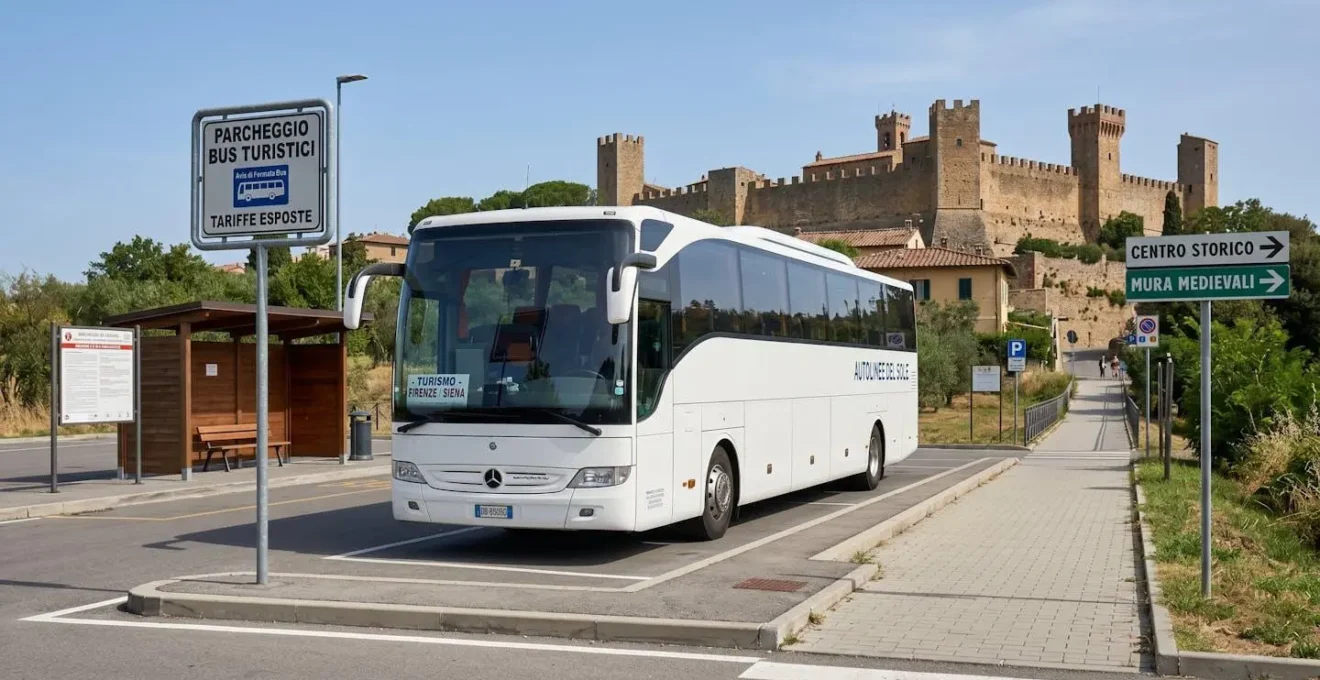
ZTL (Zona a Traffico Limitato) zones represent the highest financial risk for rental drivers. As documented in the European Commission urban access regulations database, historic centres in Siena, San Gimignano, and Florence itself enforce automated camera-monitored restricted zones. Unauthorized entry triggers substantial fines per violation, often arriving weeks later via the rental company with additional processing charges. The only compliant approach: use designated peripheral parking areas and walk to historic centres. Never assume that GPS routing or visible open roads indicate legal access—camera enforcement operates continuously without visible barriers.
Unmissable destinations within day-trip range
Selectivity serves travellers better than exhaustive lists. Five core destinations balance accessibility, cultural significance, and visit-duration practicality—together they represent the essential Tuscany experience within manageable day-trip parameters from Florence.
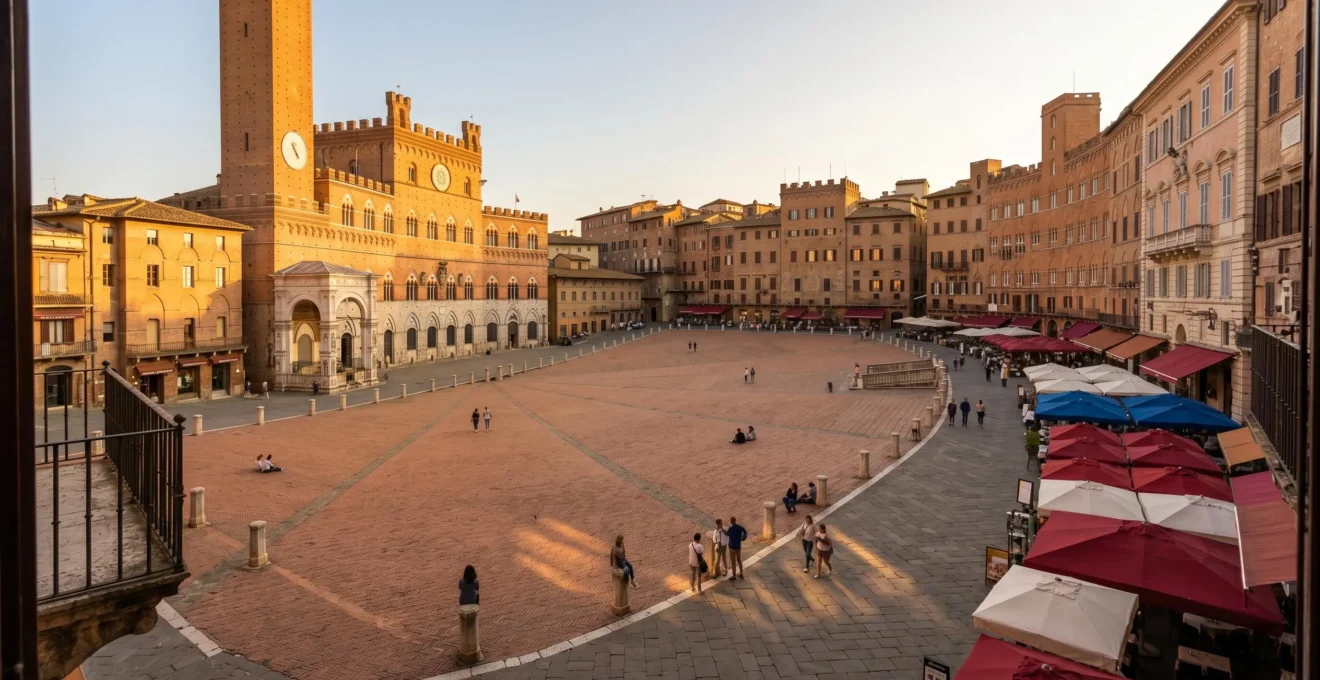
Siena commands priority positioning. The city’s Piazza del Campo—a shell-shaped medieval square that hosts the historic Palio horse races—sits approximately 75 kilometres south of Florence, reachable by regional train or organized tour. The UNESCO World Heritage historic centre merits a minimum 4-hour exploration window to experience the cathedral complex, wander the contrade (historic neighbourhoods), and absorb the piazza atmosphere without rushed superficiality. Return journey timing requires careful buffer calculation: the last reliable train departures occur in early evening, whilst tour coaches follow fixed schedules that eliminate this coordination burden.
Consider a typical day-trip scenario: departing Florence at 08:45 on the regional train, arriving Siena 10:15, exploring Piazza del Campo and cathedral complex until 15:30, then catching the 16:05 return service. This timeline provides 5 hours of unhurried exploration whilst guaranteeing an 18:00 Florence return—ample margin for evening restaurant reservations. The alternative coach tour model compresses Siena into 2 hours (11:00-13:00) but bundles San Gimignano (14:00-15:30) in the same journey, suiting travellers prioritizing breadth over depth.
San Gimignano presents medieval verticality—14 preserved stone towers that once numbered 72 dominate the skyline. Located roughly 57 kilometres southwest of Florence, the town lacks direct train access, making it the clearest case where organized tours or car rental become necessary. The compact historic centre allows thorough exploration in 2-3 hours, though the absence of major museums means the experience centres on atmospheric wandering and tower panoramas rather than extended indoor visits.
The Chianti wine region sprawls between Florence and Siena, characterized by SR222 (the Chiantigiana road) threading through vineyard-covered hills. Most family wineries require advance booking and reject walk-in visitors—a reality that demands pre-trip planning. Beyond historical context provided by expert guides, specialist tours handle winery reservations and alcohol consumption logistics (eliminating the designated-driver dilemma), whilst independent drivers gain routing flexibility at the cost of coordination responsibility.
Pisa and Lucca anchor the northwestern corridor. Pisa’s Piazza dei Miracoli complex (the Leaning Tower, Cathedral, and Baptistery) concentrates its appeal in a compact zone manageable in 2-3 hours, making it viable as a half-day excursion. Lucca offers a different character: intact Renaissance walls encircling a living city where cycling the wall-top path and exploring the amphitheatre-based Piazza dell’Anfiteatro provide leisurely counterbalance to Pisa’s tourist intensity. Both cities sit within comfortable train journey times from Florence, making them the most accessible major destinations for independent rail travellers.
Practical considerations for seamless excursions
Operational friction accumulates from overlooked details. Regional transport data reveals that Sunday and public holiday schedules operate with significantly reduced frequency across rural bus networks—a pattern that catches travellers planning weekend excursions. Wednesday market days in many towns create both attraction (authentic local commerce) and challenge (increased crowding and reduced parking availability).
Cash requirements persist beyond urban expectations. Many village restaurants and small shops maintain cash-preferred or cash-only policies, with card readers remaining uncommon in establishments outside major tourist centres. Carrying sufficient funds in small-denomination notes prevents the frustration of declined cards or inability to split large bills for modest purchases.
-
Cash reserve of sufficient funds in small notes for village vendors and restaurants lacking card facilities
-
Refillable water bottle (village fountains provide potable water, shops charge premium prices for bottled alternatives)
-
Confirmed return transport details—screenshot train tickets or tour pickup location to avoid last-minute connectivity dependence
-
Restaurant reservations for lunch (May-September peak season) as popular establishments fill by midday
-
Fully charged mobile phone with offline maps downloaded (Google Maps or Maps.me) for areas with weak rural signal
-
Comfortable walking shoes with grip—historic centres feature cobblestone surfaces and inclined streets unsuitable for fashion footwear
-
Sun protection (hat, sunscreen SPF 30+) as Tuscan summer temperatures frequently exceed 30°C with limited shade in open piazzas
-
Basic Italian phrases printed or saved digitally (“Dov’è la stazione?” for “Where is the station?”, “Il conto, per favore” for “The bill, please”)
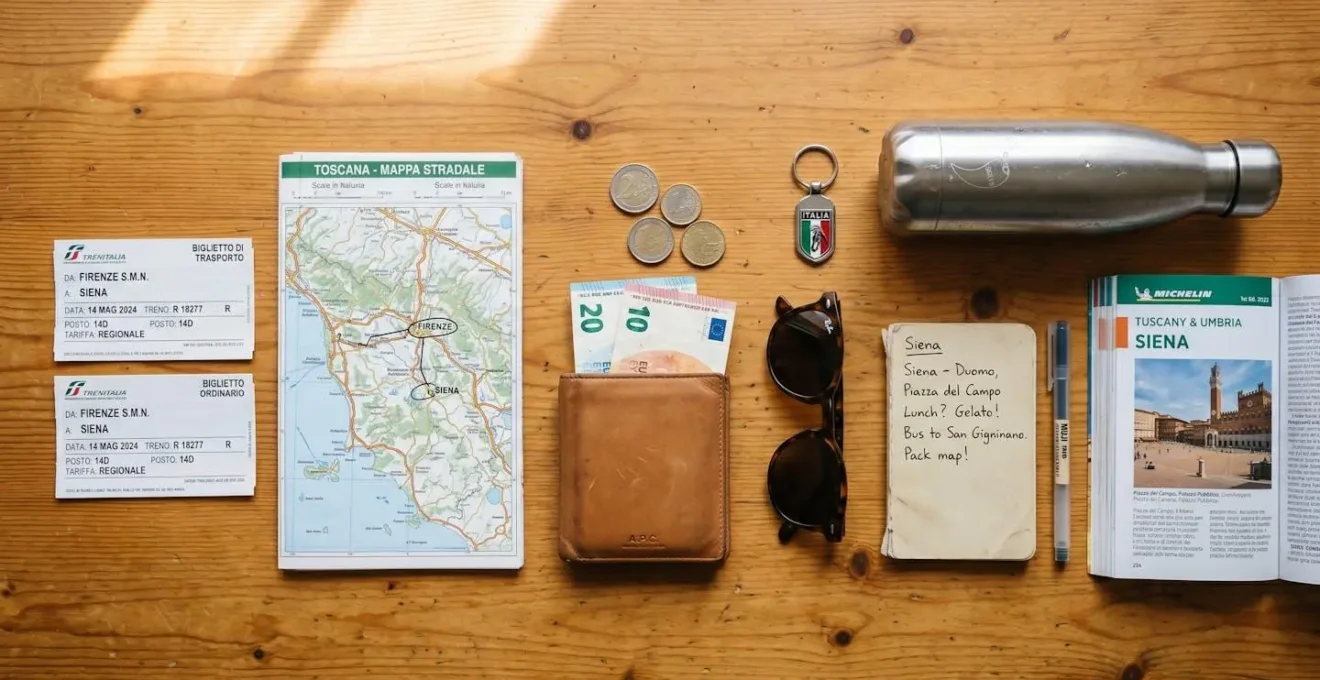
Booking windows vary by transport mode. Organized tours benefit from advance reservation during peak season (May through September), securing preferred departure dates and avoiding sold-out disappointment. Train tickets, conversely, rarely require advance purchase except for high-speed services—regional trains operate walk-up availability, though advance online booking through Trenitalia’s website occasionally offers minor fare reductions. While this guide focuses on practical transport mechanics, readers seeking deeper community engagement may benefit from cultural tour approaches that prioritize local interaction over itinerary efficiency alone.